
Health and Safety Policy — Flat Clearance Dalston
This policy sets out the commitment of the flat clearance and rubbish removal team to protect the health, safety and welfare of employees, contractors, clients and members of the public when delivering flat clearance, waste removal and clearance services. The aim is to minimise risk during all operations, from initial site assessment through to rubbish collection and final disposal. Our approach is preventative, compliant and continuously improving. This policy applies to all staff, subcontractors and anyone working on behalf of the clearance service.Scope and objectives
The policy covers all aspects of the rubbish clearance service area, including residential flat clearance, communal rubbish collection and waste removal activities. Objectives include ensuring safe systems of work, robust risk assessments, appropriate training and use of personal protective equipment. We will seek to eliminate hazards where possible, and where elimination is not feasible, we will introduce controls to reduce the likelihood and severity of harm. The policy supports safe disposal and segregation of rubbish and recyclable materials.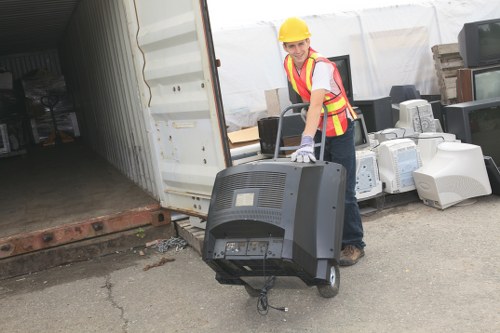 Responsibilities — Everyone has a role to play. Management is responsible for setting and maintaining health and safety standards, resourcing controls and ensuring compliance. Supervisors and team leaders must implement safe working procedures and provide oversight on site. Staff and contractors must follow instructions, attend required training and report hazards or incidents promptly. Key responsibilities include:
- Managers: policy implementation, provision of resources, audits and reviews.
- Supervisors: safe site setup, supervision, and incident response.
- Operatives: safe handling, use of PPE, and reporting of unsafe conditions.
Risk assessment and control measures
Systematic risk assessments are carried out for each task and property prior to work commencing. Controls are selected based on the hierarchy of risk control: elimination, substitution, engineering controls, administrative controls and personal protective equipment. Typical controls include safe manual handling techniques, mechanical aids for heavy items, traffic management for vehicle movements, and segregation of waste streams. Risk assessments are documented and reviewed regularly, particularly when conditions change or new information becomes available.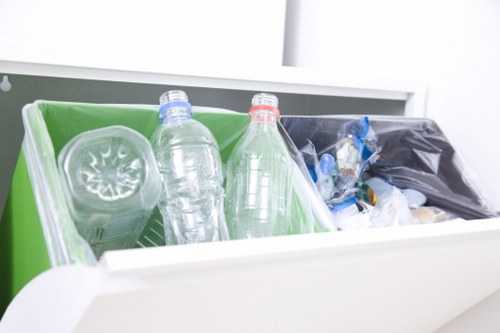
Operational procedures and safe work practices
All clearance activities follow documented procedures to ensure consistency and safety. These include pre-start site checks, identification of sharps, needles or biohazardous waste, secure containment of rubbish bags, and correct labelling of hazardous materials. Operatives must wear appropriate PPE such as gloves, high-visibility clothing, eye protection and steel-toe footwear. Good housekeeping is enforced to prevent slips, trips and falls, and routes for manual handling are kept clear to reduce risk. Vehicles and lifts are used in line with safe loading limits and manufacturer guidance.Training and competence are essential for safe waste clearance. All personnel receive induction training on health and safety policy, manual handling, waste segregation and communication protocols. Specific training is provided for working at height, use of powered equipment and handling hazardous waste. Supervised on-the-job coaching ensures competence is maintained and refreshed as necessary. Records of training and competence checks are kept and monitored.
Hazardous materials and special wastes
Where hazardous materials are identified, operations are adapted to prevent exposure. This includes asbestos-containing materials, chemicals, solvents, paint, batteries and sharps. Such items are segregated, contained and either removed by trained personnel or left for licensed removal where appropriate. The rubbish company follows accepted practice for the management of special wastes and will use authorised disposal routes. In all cases, no illegal dumping or unsafe disposal is permitted.
Incident reporting, emergency response and first aid
All incidents, near misses and dangerous occurrences must be reported immediately to the site supervisor and recorded. An investigation will take place to identify root causes and implement corrective actions. Emergency procedures are in place for medical incidents, fire, and other serious events; these procedures are communicated to staff and reviewed regularly. First aid provisions, trained first-aiders and clear arrangements for emergency medical assistance are maintained at all operational sites.
Monitoring, review and continuous improvement
The policy is subject to regular review to ensure it remains effective and relevant to the evolving operational environment. Performance is monitored through site inspections, audits, incident trend analysis and feedback from staff. Where risks are identified, action plans are developed and implemented. Compliance with applicable statutory requirements and industry best practice is a minimum standard; improvement measures are prioritised to enhance safety outcomes. All personnel are encouraged to contribute to safer working methods through reporting and participation in safety discussions.Implementation of this health and safety policy is mandatory for everyone involved in the flat clearance, waste clearance and rubbish collection service. Management will provide necessary resources to meet the commitments set out here. The policy will be made available to all staff and reviewed at least annually or when significant changes to operations occur. Our commitment is to deliver efficient clearance services while maintaining the highest standards of health and safety for people and the environment.